

Amid the fervor for the historic greenlighting of the Sepulveda Transit Corridor at the January 2026 Metro monthly board meeting, Metro is also holding virtual and in-person community meetings throughout 2026 for a less-discussed but equally transformative rail project in the Valley: the Eastern San Fernando Railway (ESFV rail). LA Digs reporter Rachel Presser attended the virtual meeting on February 10, 2026 to learn more about the current state of the project.
Striving For a Less Car-Dependent Valley
The ESRV light rail project first underwent speculation in 2010 with community input from residents of Van Nuys, Pacoima, Sylmar, and the City of San Fernando. Metro expects completion of the first segment in 2031.
As environmental, housing, and transit advocates urged for denser housing and more transit to be built in the Valley, Metro is moving full speed ahead on greenlighting projects throughout the region. The agency expects growth in ridership throughout the San Fernando Valley as more of the population ages in place and younger generations live with family longer and eschew cars due to rising living costs. The goal of the ESFV rail is to connect the G busway to northbound rail into the City of San Fernando, with riders able to take the busway four stops east to its terminus in North Hollywood to access the Metro B rail line into Hollywood and DTLA.
While the Sepulveda Transit Corridor will alleviate traffic on the west side and connect millions of west side and Valley residents to schools, major job centers, medical care, and more, the ESFV rail will create 11 new Metro stations and 6.7 miles of railway with the alignment running along Van Nuys Boulevard. The southern segment will originate at the Van Nuys G busway stop and terminate in Pacoima at the intersection of Van Nuys Boulevard and San Fernando Road. An additional study is also in the works for the northern segment creating 2.5 miles of railway and three new stations along San Fernando Road, terminating in Sylmar.

The Current State of ESFV Rail Construction
At the meeting, Metro representatives discussed the current construction scope and what Valley residents and visitors can expect to see in the coming months to plan accordingly.
The new ESFV rail will feature 6.7 miles at-grade double track alignment, 11 center-platform stations with 33 light rail vehicles, one maintenance storage facility on Keswick Street west of Van Nuys Boulevard, and 10 traction power substations (TPSS) sites to power the light rail. Additionally, Metro will construct new sidewalks and street lights then replace trees along the alignment with two new trees planted for each tree that must be removed.
Metro is in the midst of real estate acquisitions and relocations plus utility adjustment work prior to reaching the final design. With 85% of the civil design complete, Metro expects to award the Phase 2 construction contract in mid-2026.
Metro owns 14 maintenance and storage facilities in the eastern San Fernando Valley with four Resolution of Necessity approved and one owner who sued over acquisition of their land but agreed to settle.
Residentially, Metro is conducting community outreach along Terra Bella Street at the time of writing. There are condo and apartment communities, 25 businesses, one school directly on the corridor and five more schools nearby, and 360 single-family homes that are at risk of displacement or extreme disruption as the rail is built. Metro representatives plan to engage the community to address concerns and complaints.
Disruptions While the ESFV Rail is Under Construction
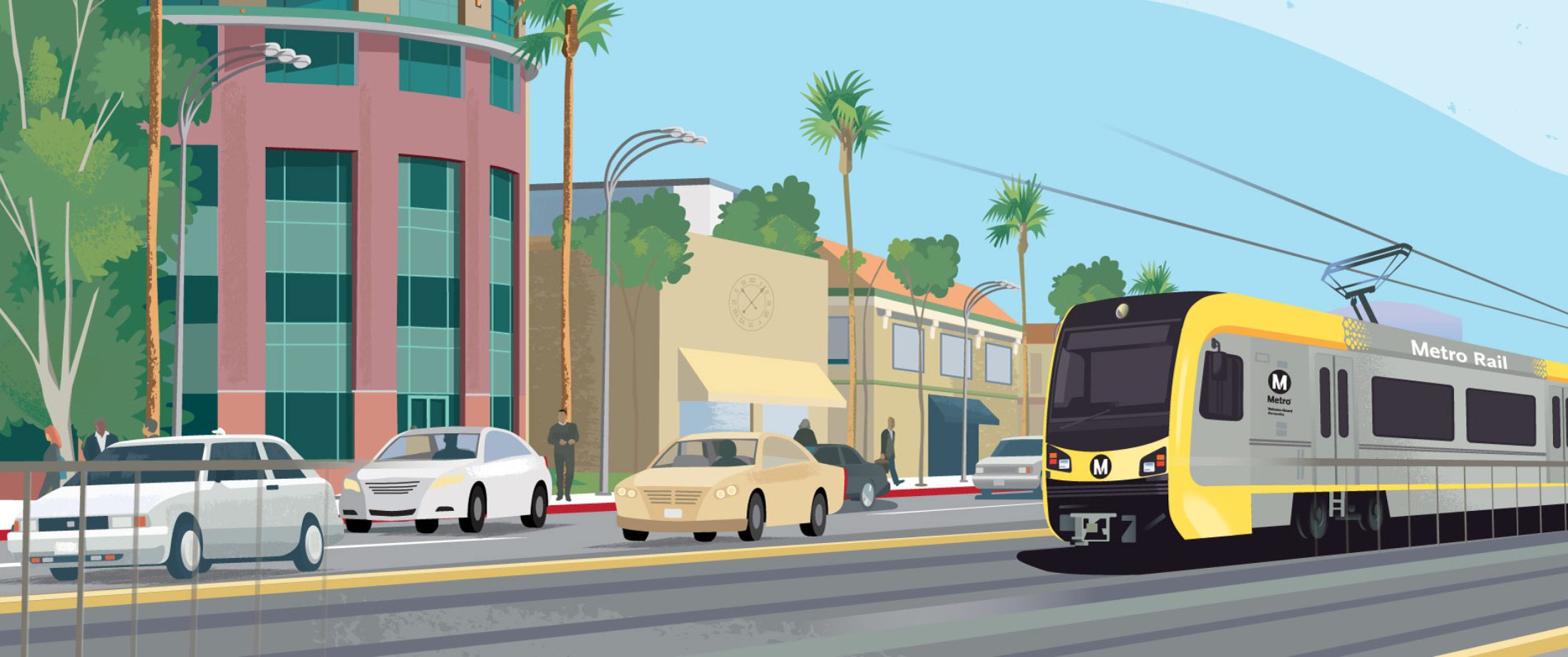
Expect lane closures along Van Nuys Boulevard until 2031. The bike lane on Van Nuys will be moved to make room for the new light rail.
Utility relocation work began in Arleta along Van Nuys Boulevard, in late 2025 at nighttime, and will continue south towards the G busway with parking restrictions as the utility companies make their way. LADWP will do a great deal of duct relocation work along the rail corridor on Van Nuys Boulevard and San Fernando Road and Southern California Gas Company (SCG) is also conducting relocation and abandonments throughout the project corridor through the night all of 2026.
SCG will relocate gas lines on Roscoe Boulevard, Sherman Way, and Wyandotte Street. If you live or work along these streets, you may face utility disruptions or need to relocate.
Residents and businesses displaced by Metro’s acquisitions in the eastern San Fernando Valley are eligible for relocation benefits paid by Metro. At the time of the meeting, there were 112 total relocations with 50 successfully completing their relocations and receiving benefits. Eligible small business owners can also receive up to $60,000 per project year if they are directly impacted by the adjacent ESFV rail construction through Metro’s Business Interruption Fund (BIF). BIF grants are awarded based on revenue loss during the construction timeframe.
To date, $1.8 million of BIF grants have been awarded to businesses in Pacoima and Van Nuys affected by the construction. Small business owners impacted by the construction are encouraged to apply for BIF grants online and in person at the BIF workshop on March 4, 2026, and to participate in Metro’s Eat, Shop, Play program that provides free marketing boosts to small businesses located along the rail alignment.