

What happens to a formerly car-centric community when accessible public transit arrives? For many homeowners’ associations across Los Angeles County, the thought of adding dedicated bus lanes, visible light rail, or even subterranean tunnels for heavy rail has prompted concerns about aesthetics and quality of life. Culver City, which welcomed a light rail station in 2014 and installed dedicated bus lanes in its downtown during the pandemic, is an intriguing case study for those who are worried that public transit will negatively affect their communities.
According to Darryl Menthe of the Culver City Downtown Business Association, the expanded access to transit via the dedicated bus lanes has generally been positive, although the long-term effects of the pandemic on commerce somewhat cloud the results. “I don’t know what I can and can’t attribute to the buses,” Menthe explained, “and I say that because business fell off during the pandemic and never recovered.”
Prior to the pandemic, most businesses in Culver City remained open until 11 p.m., and parking was a scarce commodity. Currently, most businesses now close around 10 p.m., and still aren’t doing the volume of business they did in 2019. However, according to Menthe, compared to other cities such as Santa Monica, Culver City’s business district is currently performing better.
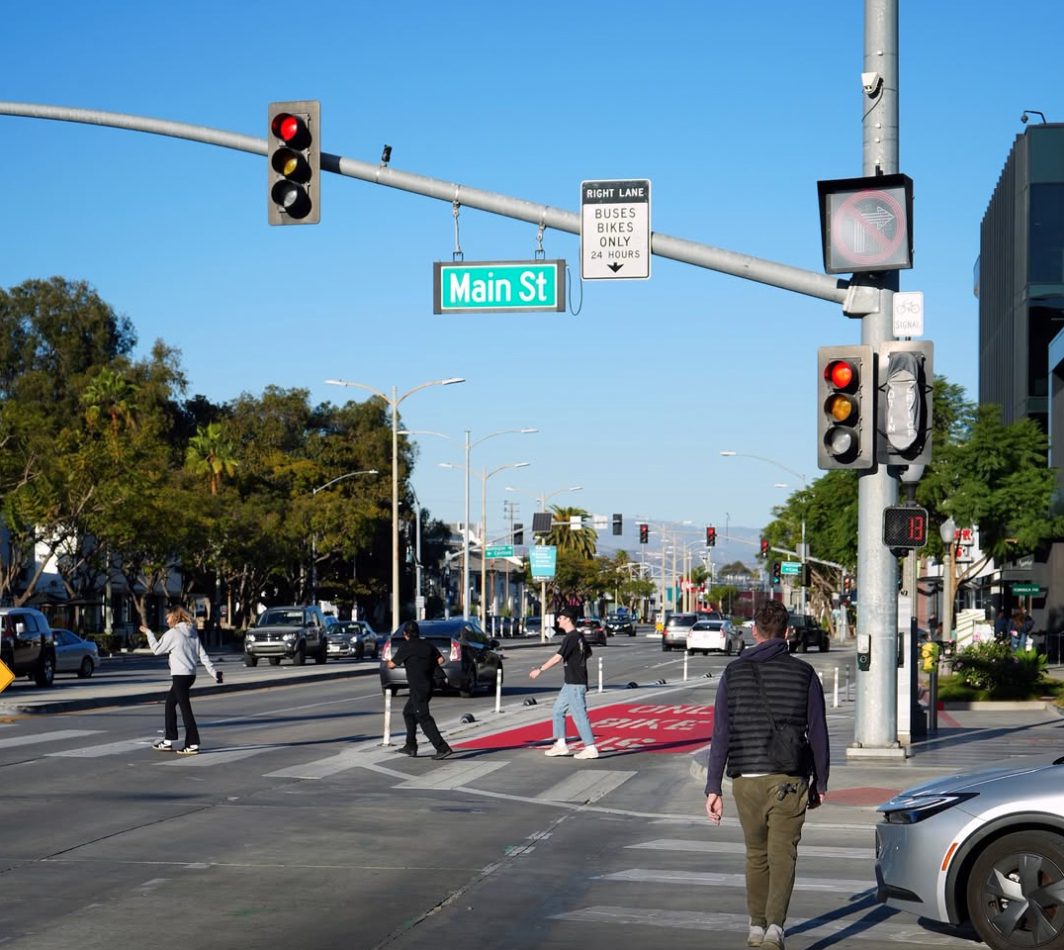
One benefit of the dedicated bus lanes that both Menthe and Culver City’s Transportation Community Engagement Leader Dia Turner cite is that business owners are thrilled that their employees are “able to have a guaranteed door-to-door way to get to work,” as Turner described it. This easier employee commute isn’t limited to the restaurants and boutiques on Washington Boulevard; Amazon, Apple, and Sony have also been actively working with the city to promote car-free ways of getting to their respective campuses.
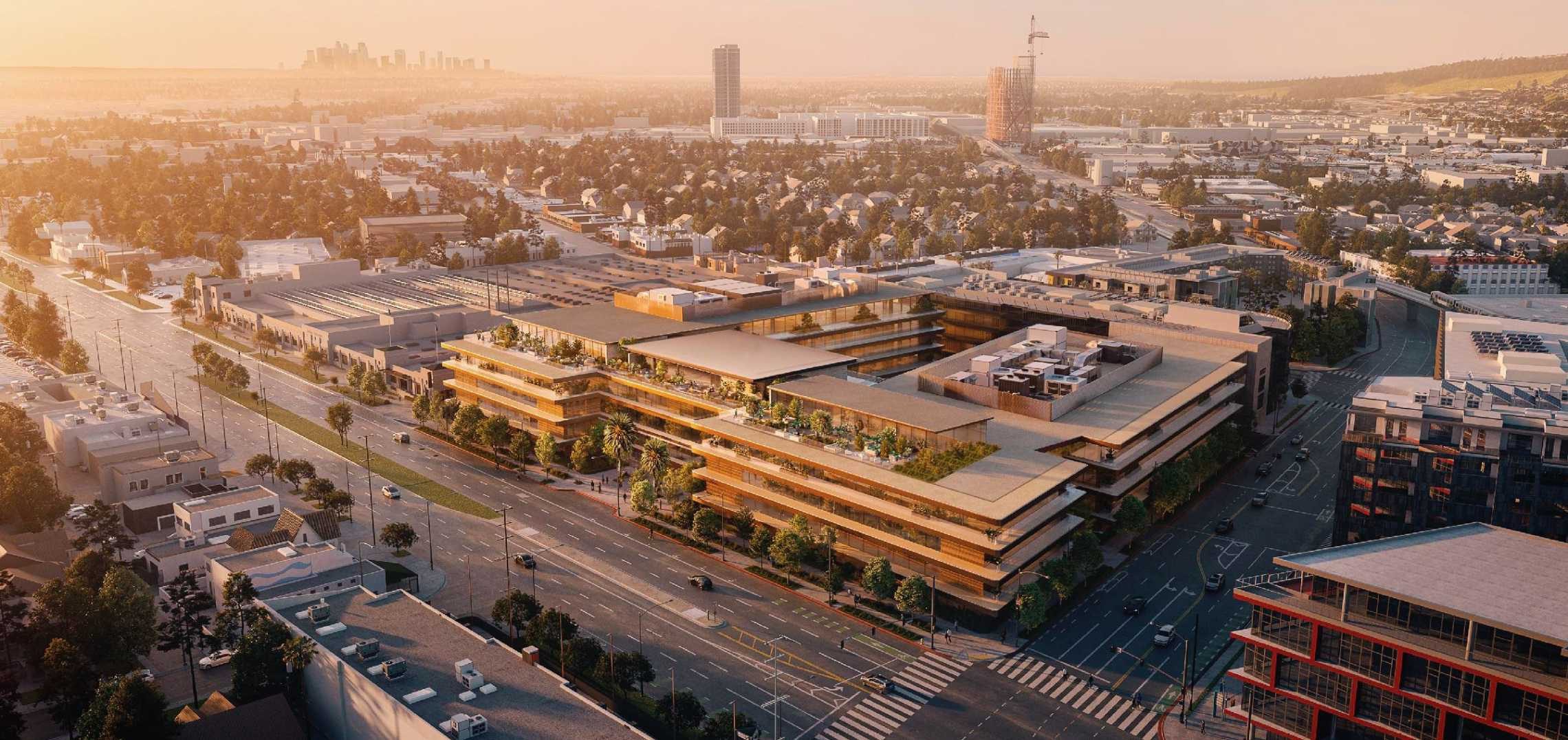
“For Apple Crossings, which they are building on Washington, Venice, and National Boulevards, Apple is only building half as many parking spaces as their headcount,” Culver City’s Transportation Planner Ryan Hund said. “That was an agreement they made with the city. Major employers are really committed to making sure there are options for people not using cars in the downtown area. For example, Amazon has added a lot of bike parking infrastructure.”
One negative takeaway from the dedicated bus lanes is the erasure of downtown street parking spaces, which Menthe believes has partially led to the upcoming closure of the Starbucks located at 9718 Washington Boulevard. He bases this on the fact that a Starbucks located only half a mile away at the Venice Crossroads Shopping Center, which has an abundance of parking, is still thriving. “[The lack of street parking] is not a major cause, but it’s an irritant to the businesses,” Menthe said.
In a testament to the relative popularity of public transit within Culver City, the municipality’s overall ridership numbers are strong compared to nearby transit systems. According to Hund, “Starting in 2021, when transit agencies nationwide were seeing really depressed numbers as as result of the pandemic, we were tracking the recovery in the downtown area, and as of 2025 we have almost gotten back to our pre-pandemic ridership. We were double the growth rate of the rest of the system, and almost triple the growth rate of LA Metro’s ridership.”
Due to increased ridership demand, the city recently expanded its service on several bus lines, including the 1, the 3, and the 6. Culver City Bus Route 6, which runs primarily on Sepulveda Boulevard from the UCLA Campus to the LAX Metro Transit Center, is the system’s most popular route, accounting for approximately 2/3 of all riders with an average daily ridership of 7,500.
“We’ve improved Line 6’s weekend service above what it was in 2019,” Hund notes, an impressive feat that seems to reflect a wider trend for increased demand for weekend transit service. According to Hund, the opening of the LAX Metro Transit Center actually shortened Line 6’s route, which essentially allowed the city to add more buses without significantly increasing expenditures. “The community engagement has been amazing,” Turner adds. “For the bus lanes, the community was asking for more.”
Generally speaking, the increased transit options seem to benefit a wide array of residents, from parents to bicyclists to residents living in denser developments who may not own a car at all. “Many parents are vociferous about the freedom and autonomy the Go Pass Program, where students ride for free on all LA County transit, provides their kids,” Turner explained. “We also have about three to four bicycling groups in Culver City that are very collaborative and partner with us on events and messaging to let people know that by putting a bike on the bus, you’re able to expand the reach of your bike trips.”
The circulator, a mini-bus pilot program that offers hyper-local service primarily along Culver and Washington Boulevards, has attracted both praise and bafflement from residents. “For the residents who it works for, it works really well,” Turner said. “There is a Mom who is able to walk out, get the circulator, take her kids to school, work from home, and do her grocery shopping. Other residents have complained: why does she have Uber service and we don’t?” The circulator has also encouraged some employers “to modify their hours to the operations of the circulator, so at the end of the line the business closes up and everyone takes the circulator to the [Culver City Metro Station] train.” Both Hund and Turner emphasized that the circulator will soon undergo a review period based on performance and community feedback.
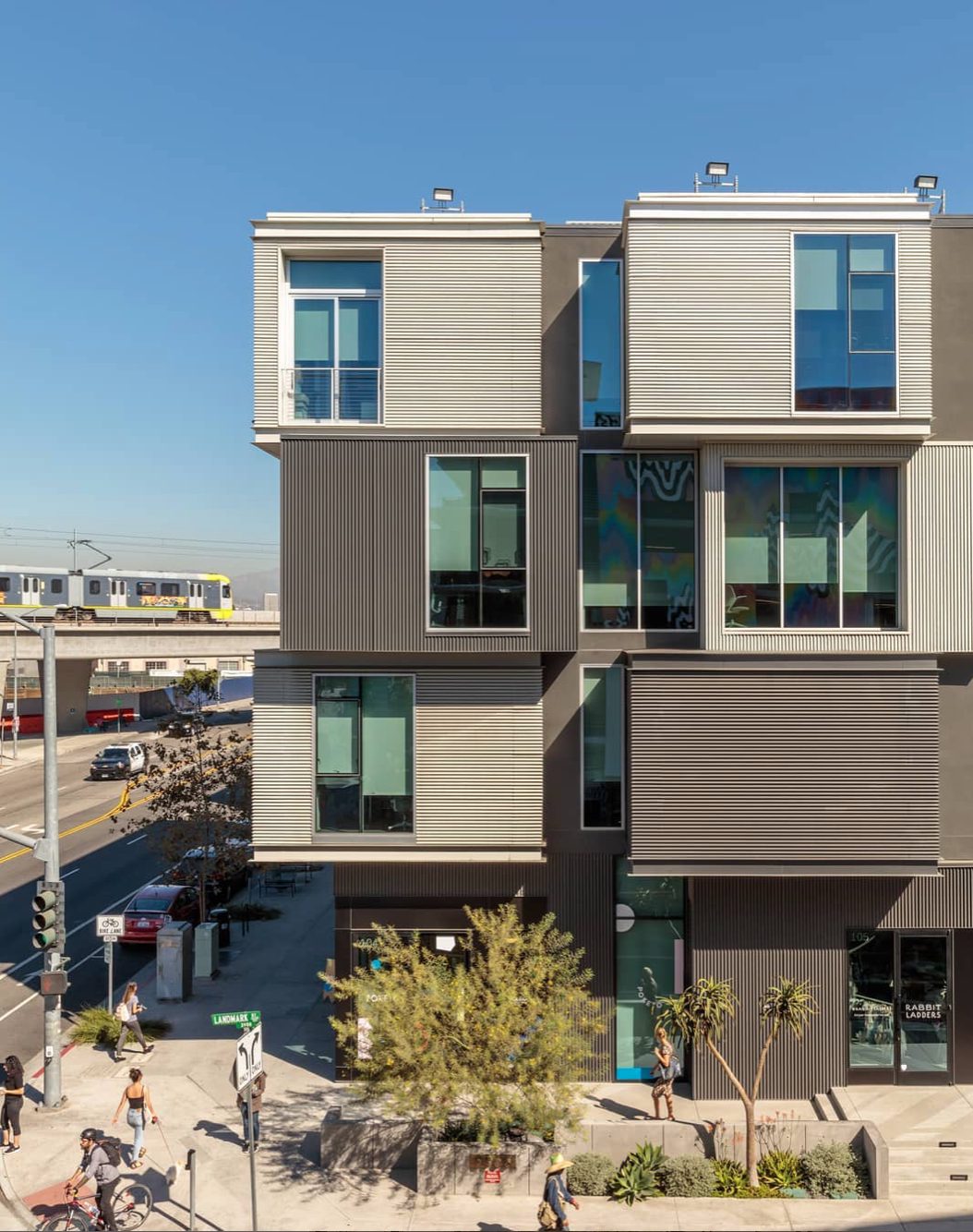
As to the aesthetics of a visible elevated light rail station, Platform, a flourishing mixed-use retail center located directly under the Culver City Metro train station at 8850 Washington Boulevard, not only boasts a number of restaurants and shops, but also a public park that is often host to bustling weekend events.
Designed by Abramson Architects, Platform engages directly with the infrastructure of the station, a visual aesthetic that documentary filmmaker Nick Andert has noted “slaps.” For pedestrians, stepping off the train and into the crowd of shoppers, diners, and recreation-seekers is a pleasant slice of urbanity; the dynamic is exciting, and has transformed what used to be a relatively nondescript industrial intersection into a destination.
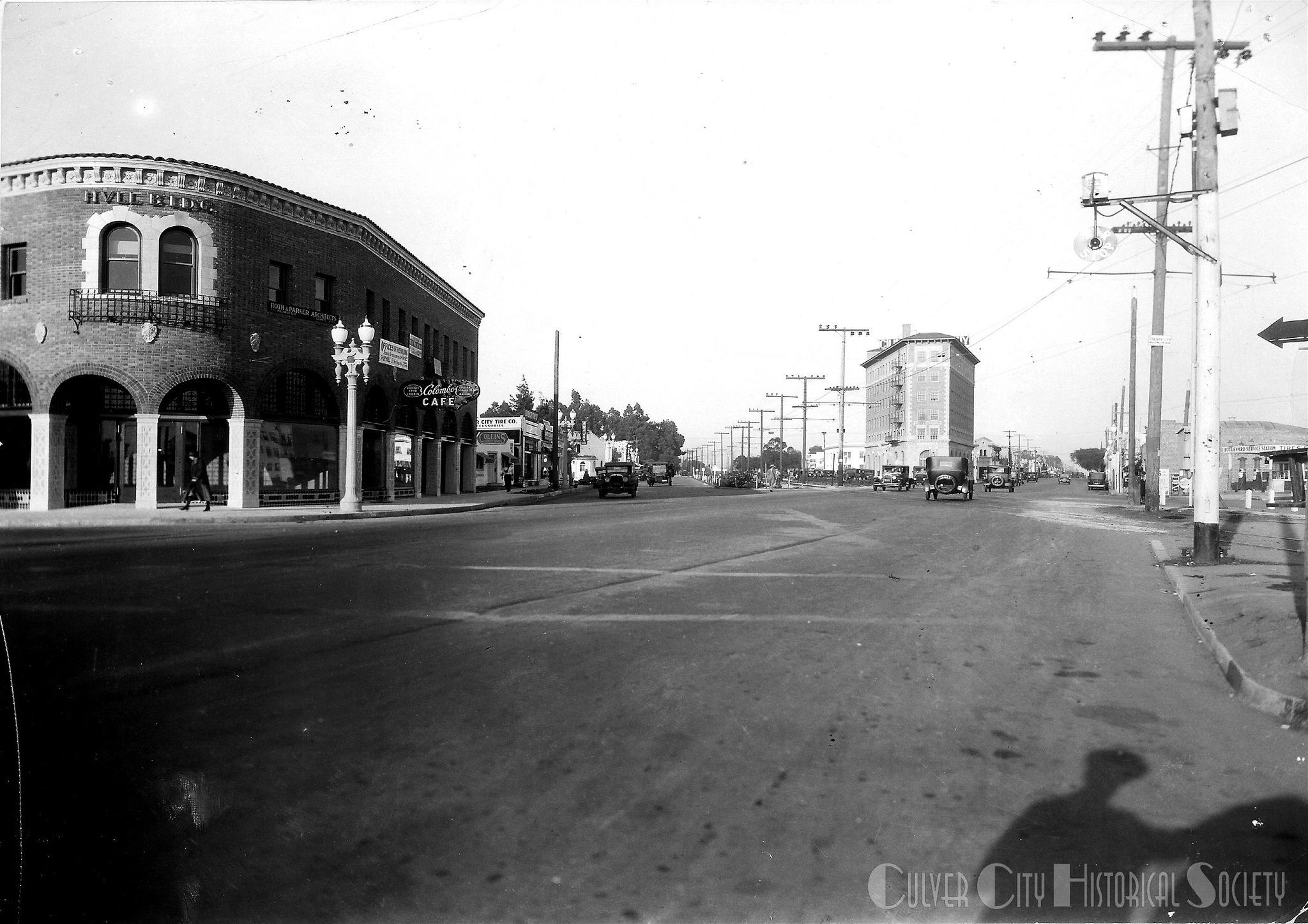
Ironically, Los Angeles used to have a thriving public transit system in the form of streetcars known as The Los Angeles Railway. Culver City was founded in part because it was at the junction of three of these lines, helping to create what became a burgeoning movie-making neighborhood. The last streetcar in Culver City was discontinued in 1953, and the era of a car-centric metropolis, at least in the popular imagination, began.
In many ways, Culver City’s expansion of public transit is a return to form. By garnering an overall positive response from long-term residents and attracting a host of high-paying employers, Culver City’s story is a reminder that greater accessibility is a two-way street.