
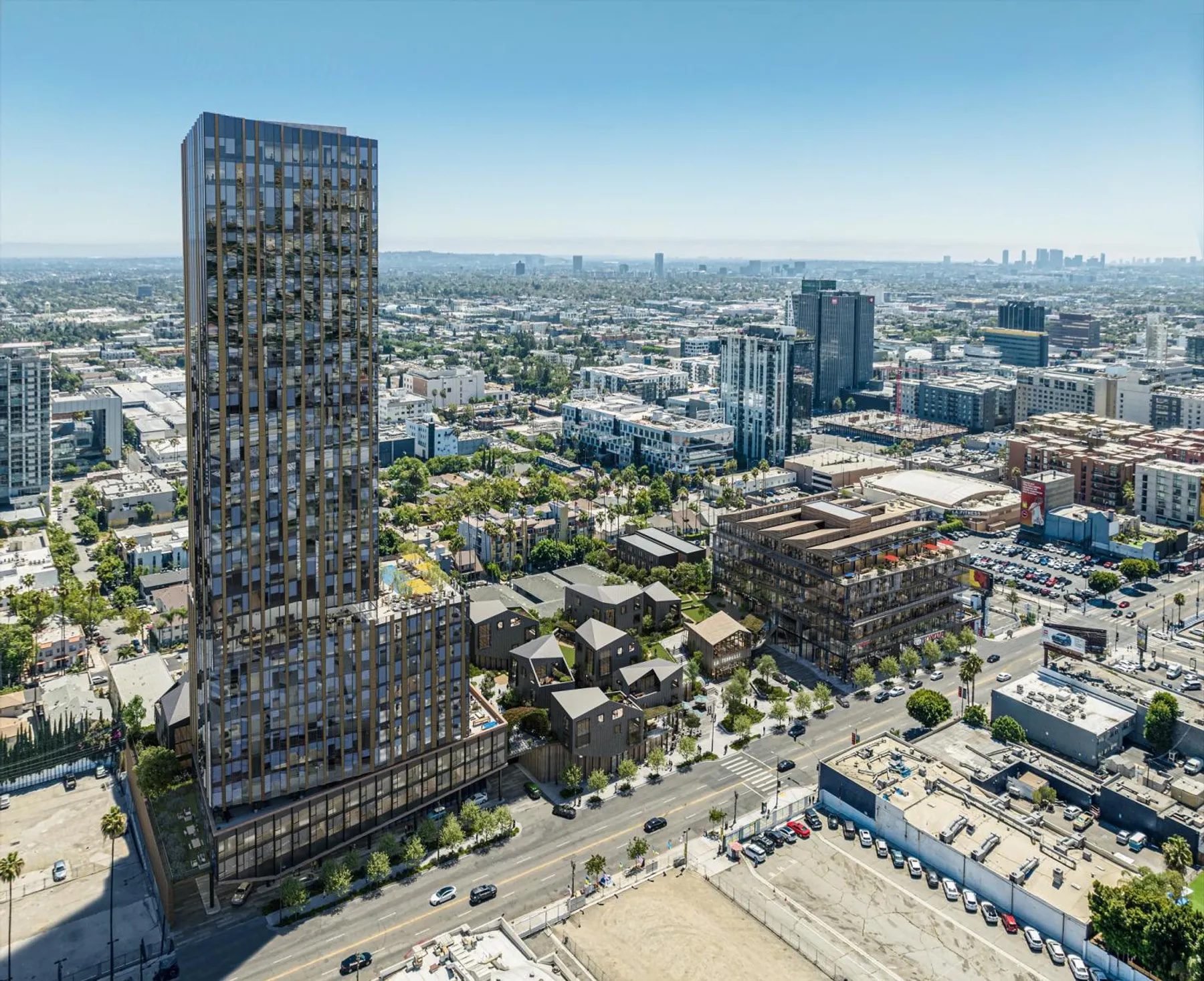
At a hearing held July 16 reviewing the environmental impact report for the 6000 Hollywood Boulevard Project, the majority of the 30+ members of the public who called in during the comment period were in support of the proposed mixed-use development, which would replace a former Toyota dealership with 350 housing units, 136,000 square feet of office space, 18,004 square feet of retail, and 4,038 square feet of restaurant space on a 3.7 acre site.
In addition to numerous long-time Hollywood residents who are in favor of the project’s new housing, Jeff Loeb, the President of the Pantages Theater, called in to say that other recent developments in the neighborhood have had a positive effect on “street activity.” “I’ve seen the Boulevard through its ups and downs,” Loeb explained, alluding to his 23 years with the Pantages. “Opportunities to bring investment to this area don’t come along every day. Residents and businesses will benefit from [6000 Hollywood Boulevard] becoming a reality.” Aaron Taxy of the Hollywood Chamber of Commerce and Anita Siraki of the Hollywood Media District also called in to voice their support for the project’s potential economic impact.
Hines, the developer of the project, has apparently contracted with the Laborer’s International Union of North America for a significant portion of the construction work, but not with the Ironworkers 433 or IBEW 11. Members of the latter two groups made their opposition to the project clear, while several members of the LIUNA called in to vocally support the project.
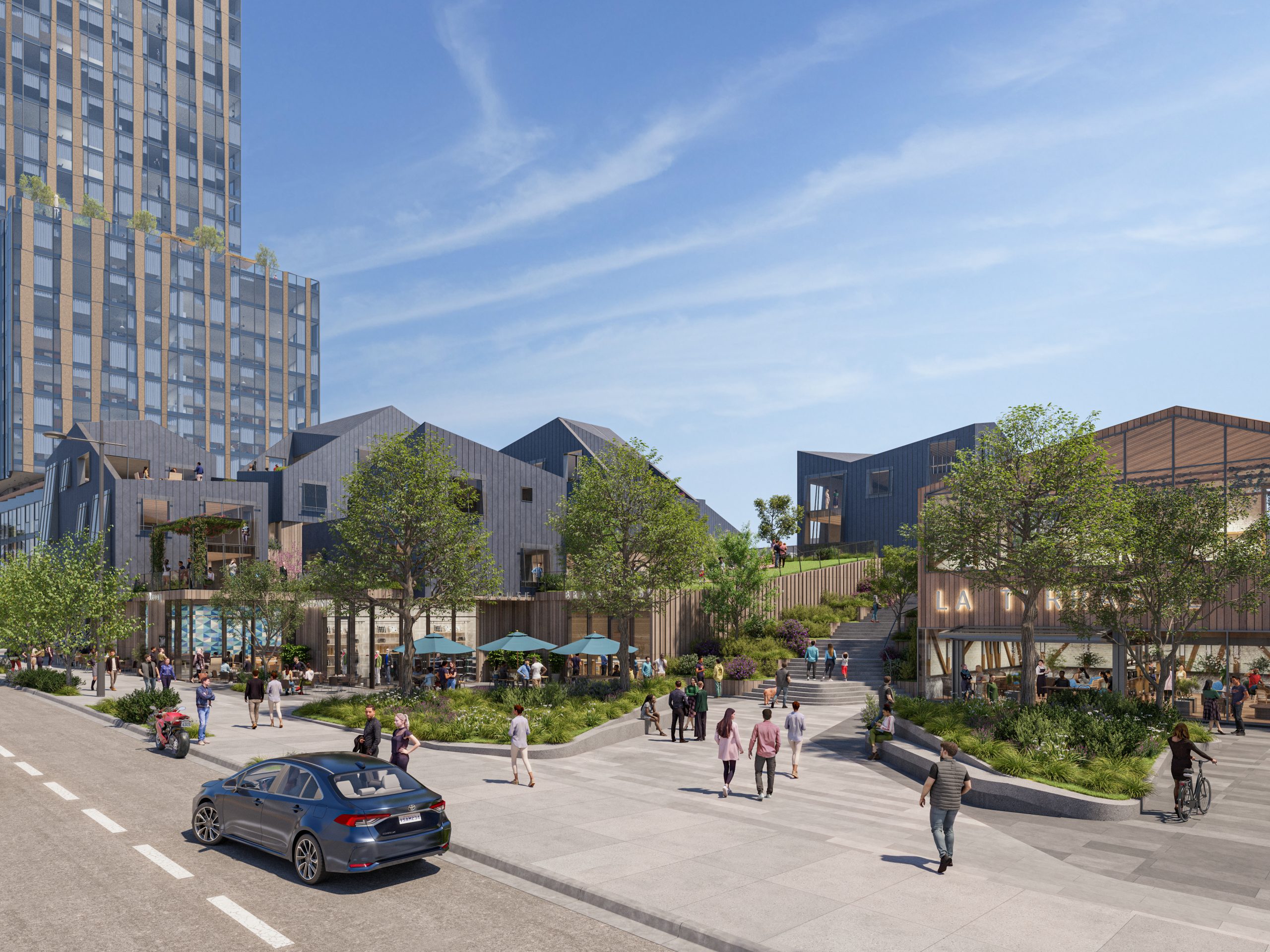
Office Untitled is designing the project, which will consist of three large buildings and 11 low-rise structures artfully positioned among ample green space and 88 freshly planted trees. Much of this green space will be open to the public.
The tallest structure, Building B, will have a height of 419 feet, span 35 stories, and primarily consist of residential units, 44 of which will be reserved for very low income residents. Building A will be six stories tall and comprise primarily office space, while Building C will be four stories tall and contain 46 residential units. The zoning in this area allows for unlimited building heights thanks to its proximity to the Hollywood and Vine Metro transit station.
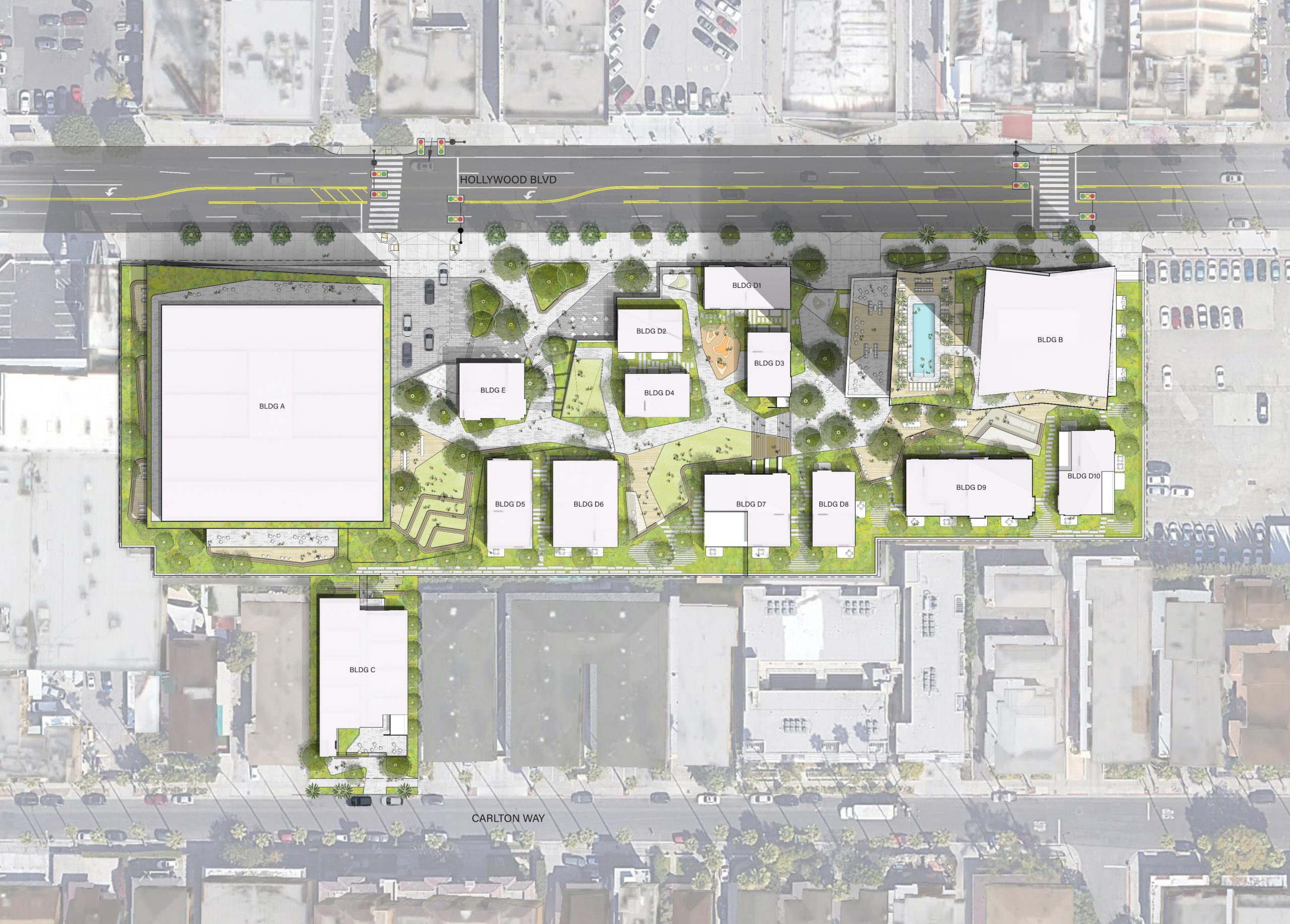
A few residents voiced their opposition to the project, including a Carlton Way resident whose current two-story apartment building will largely be in the shadow of Building B, and the operator of a neighboring preschool who is worried about noise during the proposed 44-month construction period.
A representative from The Audubon Society has also raised concerns that Building B will impede migration for bird species, but Spencer Kallick, the applicant’s representative, said that the type of glass proposed for the structure would help mitigate interference with birds, and that a 20-foot “sound barrier” would be installed to lessen construction noise.