
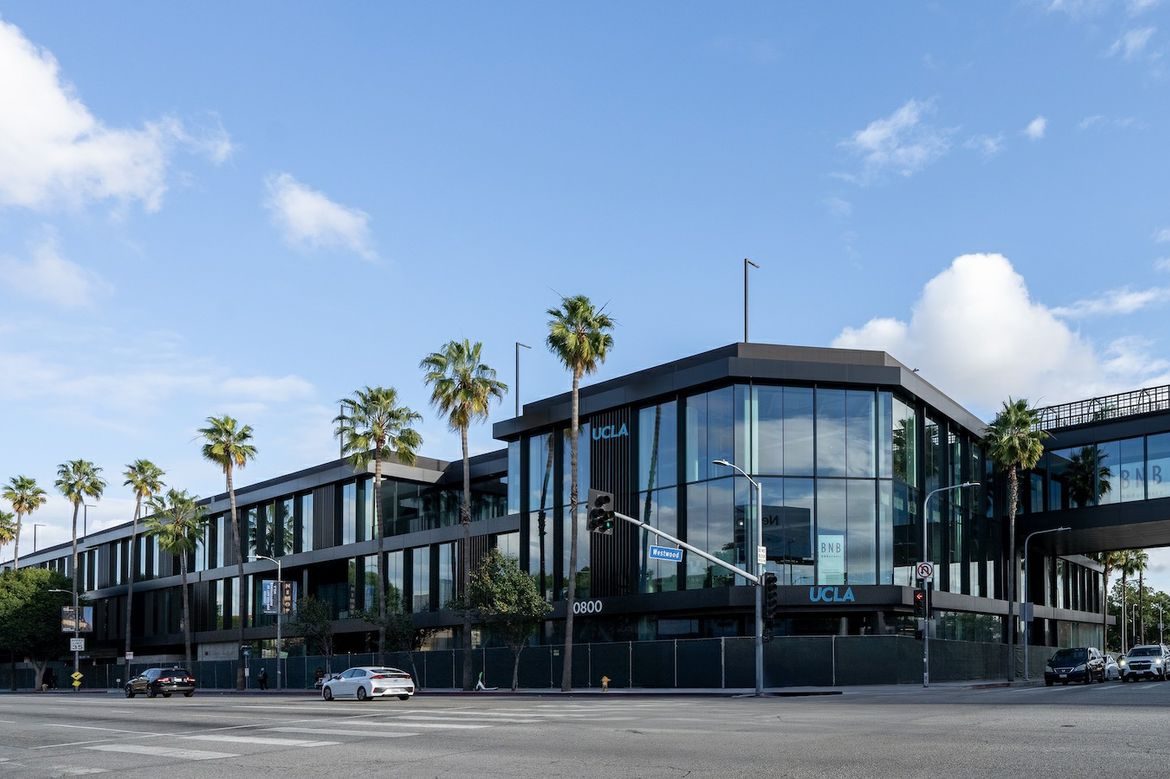
Los Angeles has long been associated with mall culture. Parts of Clueless and Tom Petty’s “Free Fallin’” video were filmed at the Westside Pavilion, a once-thriving mall that closed in 2018. The city can now be seen as an intriguing case study for why some adaptive reuse mall projects are successful, while others are not. How can an empty shell of brick-and-mortar retail be transformed back into a thriving cultural and revenue-generating center?
Take, for example, the Westside Pavilion itself, now renamed the UCLA Research Park. Although the project is not slated to be completed until 2027, the effect of Flad Architects’ adaptive reuse work is already visible from Westwood Boulevard. What had become an oversized display case for dust is now newly sleek and energized: banners from UCLA hang where movie-goers once drove in to park. For passersby and the neighborhood businesses, it’s starting to feel alive again.
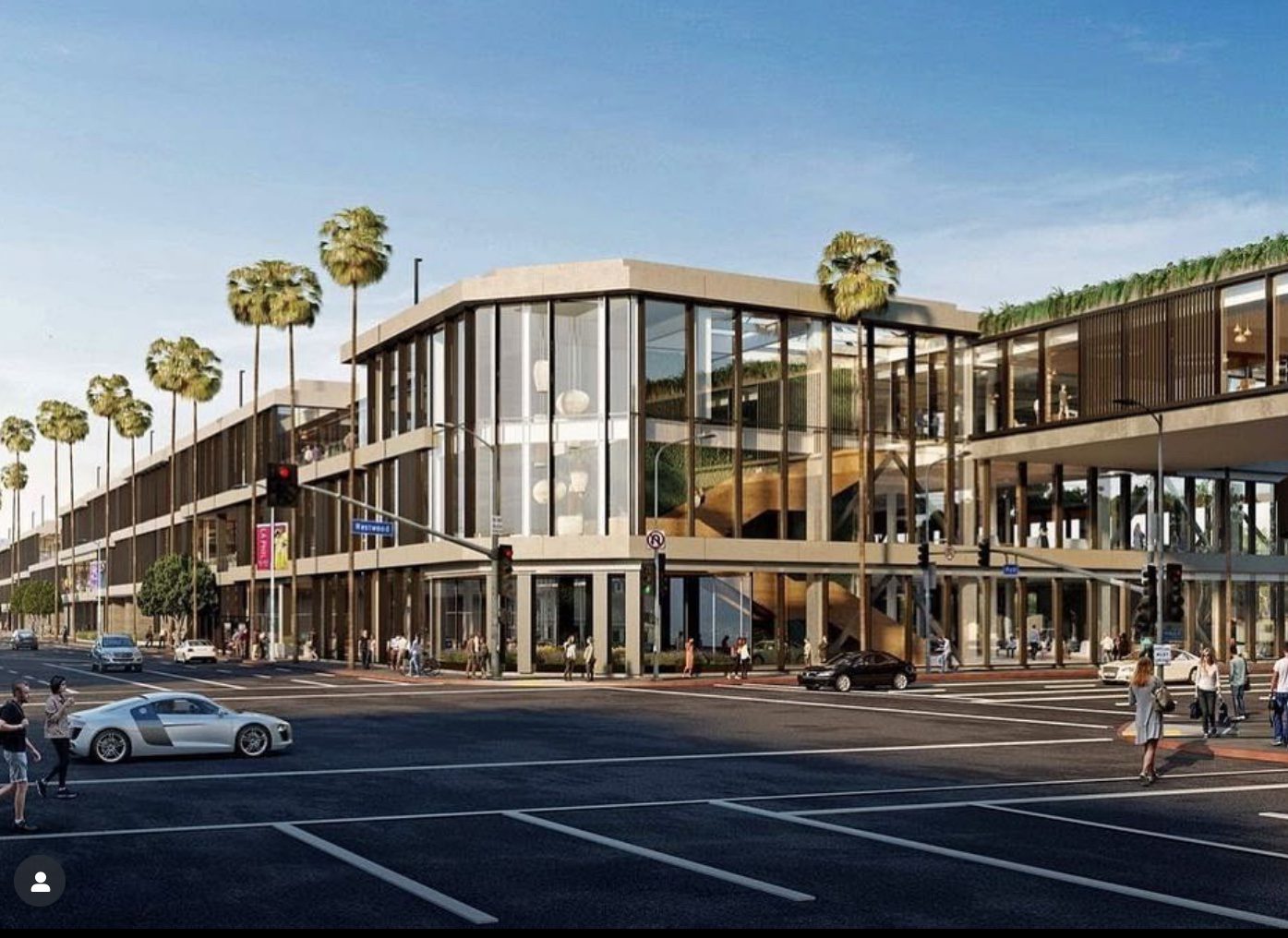
The work to transform it from a mall to a state-of-the-art laboratory/research center has not been logistically easy, complicated by the fact that the mall was briefly leased by Google before being purchased by UCLA and partially transformed into an office building by Gensler. As Andrew Cunningham of Flad Architects noted, “science buildings are much more robust in terms of infrastructure and building requirements than retail structures.”
There’s the need to clamp down on floor vibrations, for example, so that microscopes and other sensitive scientific equipment (especially for quantum mechanics research) aren’t jostled. Electromagnetic frequencies from the surrounding neighborhood have to be mitigated, and the ventilation systems have to be modified so that the air is sterile for laboratory conditions—i.e., no recirculation allowed. Then there’s the basic issue of security—when Gensler was transforming the mall into an office building for Google, windows were naturally prioritized, but for a scientific research center, “there’s sensitivity around the production of intellectual property—we don’t want people peering into the windows.”
However, successful mall transformations are not strictly about structural challenges. According to Ben de Rubertis of Flad Architects, the cultural associations that the neighborhood has with the former Westside Pavilion are crucial. “It’s a building that’s already been in a thriving community where people have significant memories and ideas, and it’s played in the development of culture in their own lives,” he explained. “We had a work session where a couple of the consultants were gathered in an area in the mall where they used to take their kids for ice cream when they were little.”
According to de Rubertis, the Westside Pavilion was the location of one of the first drive-in movie theaters for West Los Angeles. “Seeing this project move ahead into a new era of relevance for UCLA and for the surrounding neighborhood is super exciting because it doesn’t have to break so significantly from the rich history that it has enjoyed,” he explained. “Some of that history is memory-based, some of it is physical, and it’s a really pleasurable challenge for the design-team, the ways we can update it without erasing the ties back to memory and community.”
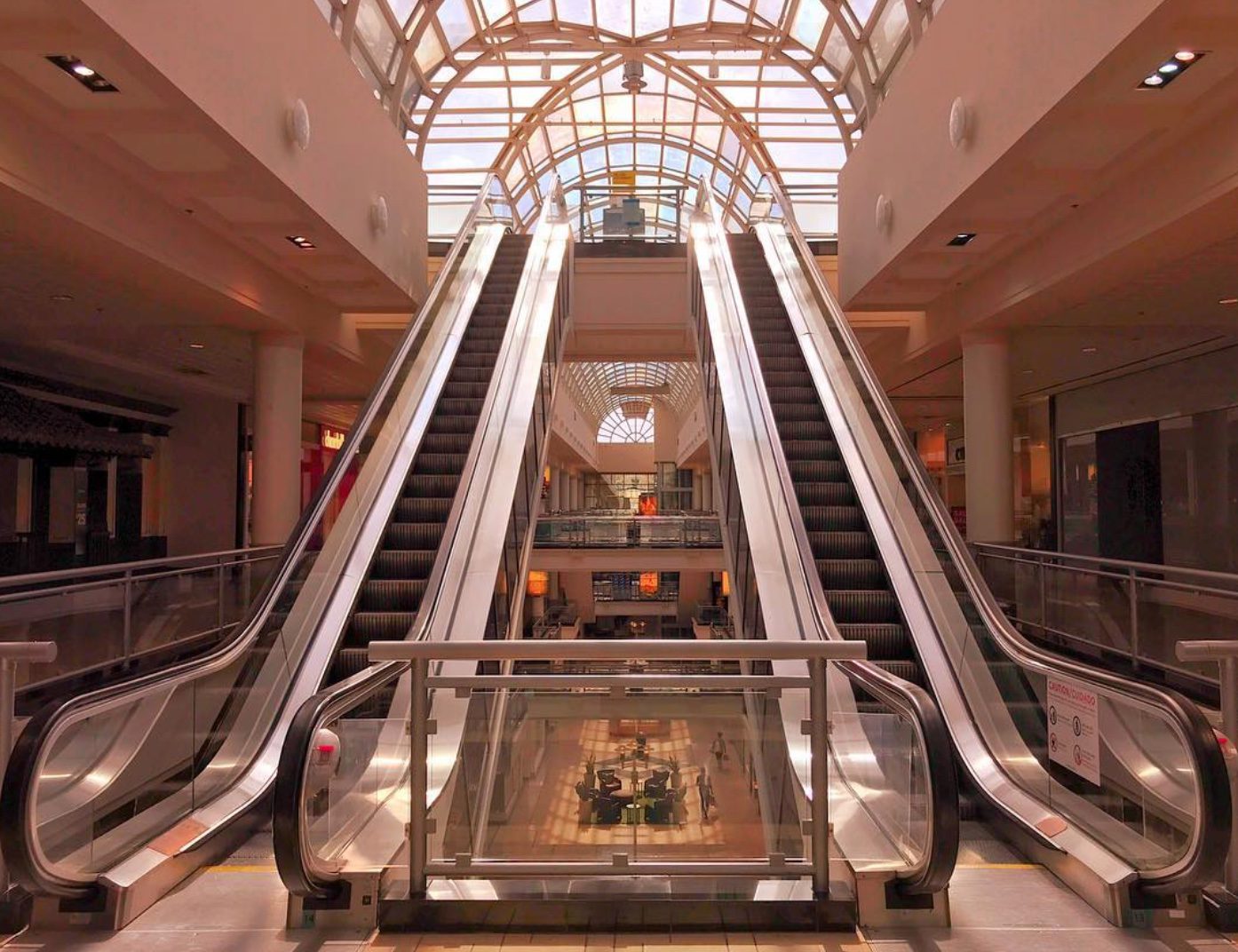
Monetarily speaking, the project also has the advantage of introducing a new public-private revenue model. Although it is named the UCLA Research Park, the university will not be the sole occupant of the structure—several other private industry tenants will lease spaces with the plan of generating revenue from their research and becoming self-sustaining.
“When we spoke to UCLA’s chancellor, we identified this as a new mechanism to partner with private industry,” Steven Ryder of Flad Architects explained, noting that with the recent cuts to the National Institutes of Health and other federal agencies, older revenue models may not be as successful in the future. “This is all about creating revenue in a different way. This is a new paradigm that I think we will see a lot more of nationally, and are seeing with some of our other clients.”
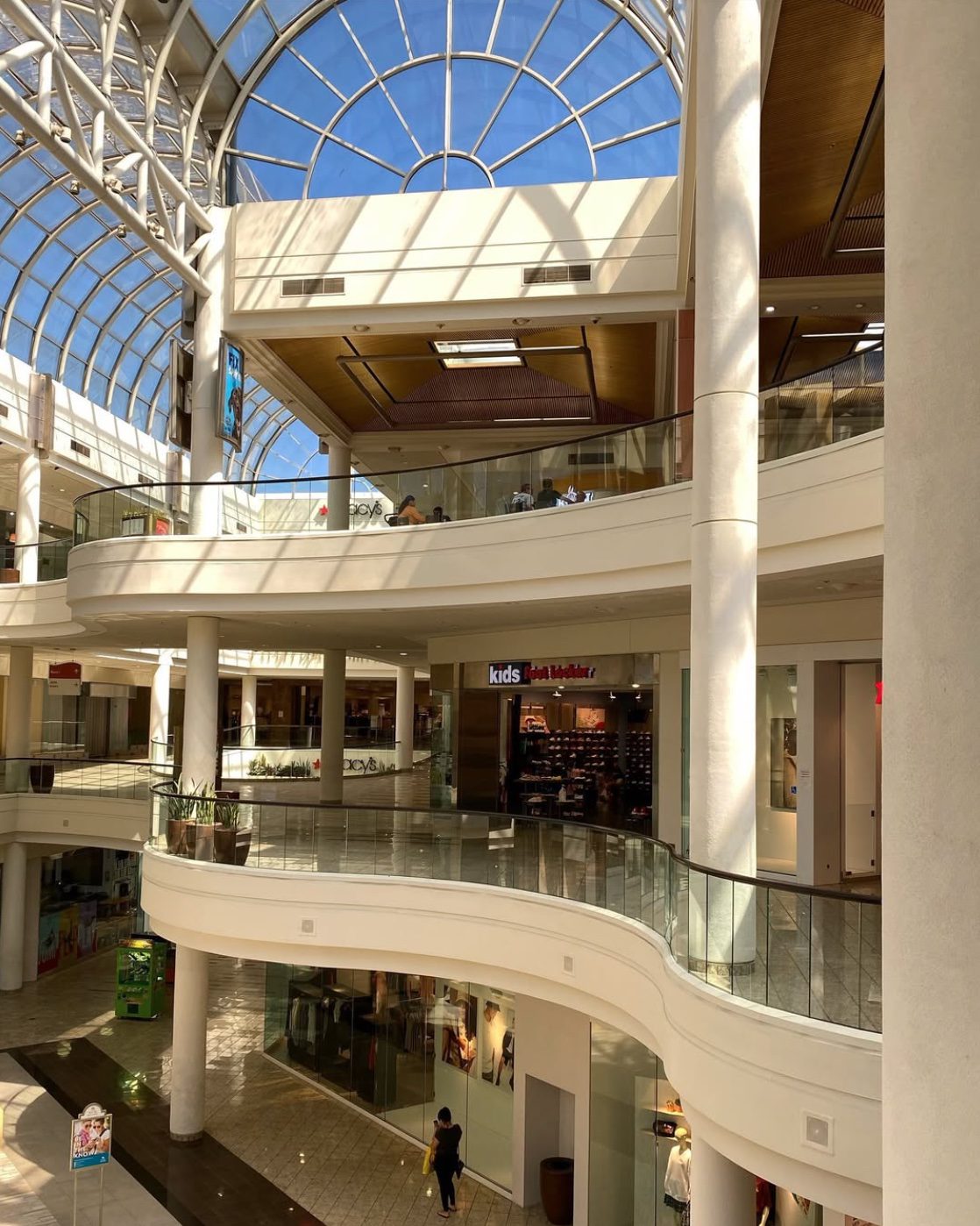
The quest for new successful revenue models has also underpinned the redevelopment of the South Bay Galleria, a mall located in a section of Redondo Beach that borders the cities of Lawndale, Torrance, and Hawthorne. According to City Council Member for District 4 Zein Obagi, Jr., “The South Bay Galleria used to be a huge economic generator for the city, and now it’s generating hardly anything.”
Initially, the Australian investor QIC had purchased the Galleria from Forest City in 2018 and then eventually sold to investor L. Catterton when the pandemic hit. Unfortunately, after nearly a decade of promising to create between 300 and 650 residential units on the site, in July 2025, L. Catterton defaulted on its loan and the mall is now once again up for sale. The city of Redondo Beach welcomed the former investor’s plans, approving several different iterations over the course of the last decade.
The only real logistical challenge to the Galleria’s redevelopment is something known as reciprocal easement, which in this case applies to the gigantic parking lots in front of Macy’s and Kohl’s. The department stores are not keen (or legally obligated) to give up rights to their parking lots for affordable housing, which is partly why in all of the development schemes, the residential units were placed either behind or to the side of the massive retailers. The anchor tenants have the right to deny any development on these grounds for the length of their leases, which could last for 25 years or more. Obagi, Jr. notes that the California state assembly currently is working on the passage of a law, AB 1015, which would legally compel property owners to allow affordable housing on their reciprocal easements.
“The community is very eager to have a new place to hang out that’s modern, cool, and outdoor,” Obagi, Jr. continues. “If it comes with residential, they’re okay with that as long as we control for traffic.”
A popular Reddit thread attests to the generally positive feeling many residents have about the mall’s redevelopment. “NIMBYs will hate it but we desperately need more modern apartments in Redondo/South Bay,” Reddit commentator DonStockton64 says, garnering nearly 187 positive responses on the platform from other users. “Every apartment here is built in the ‘60s or ‘70s. I wish they’d just tear it all out and build an outdoor shopping center like the Americana or Grove. Look at how many people go to the Point or Manhattan Village now compared to the ghost town of the Galleria.”
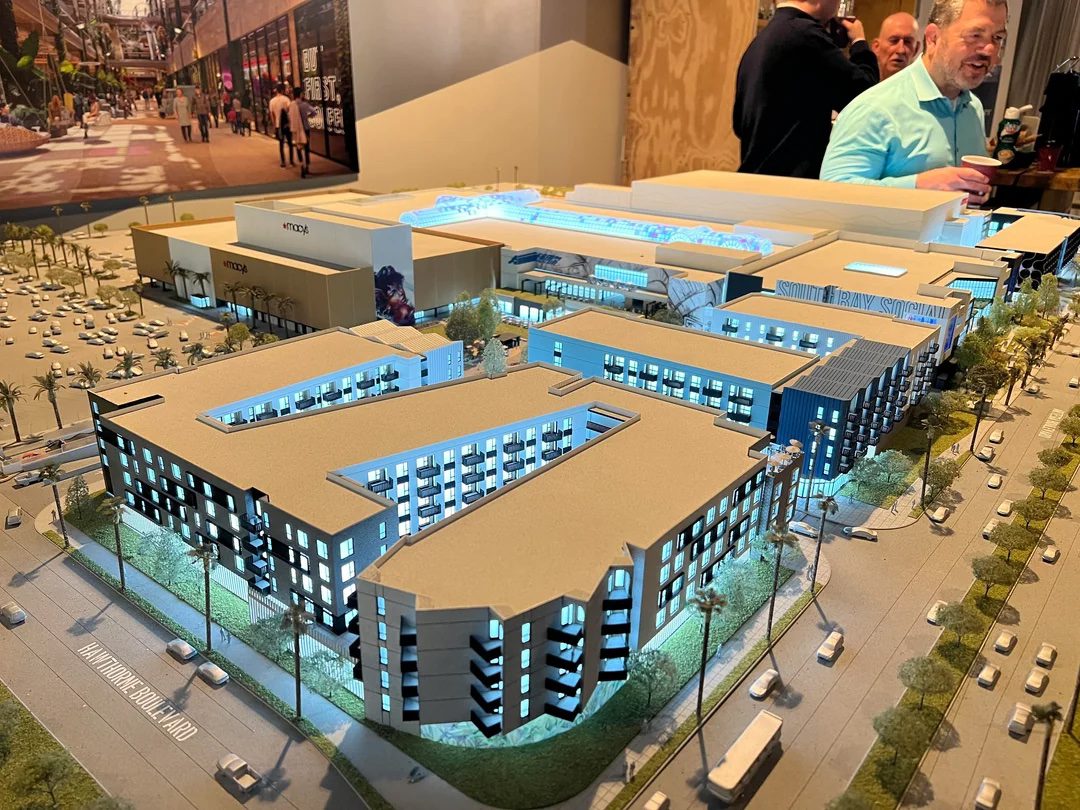
The South Bay Galleria’s failure appears to be redeemable if the right team of investors/developers can be found. Neighboring Orange County has already started to discover the benefits of mall redevelopment—MainPlace Mall in Santa Ana, for example, is successfully transitioning into a mixed-use center with residential units, and several other local malls are being actively considered as adaptive reuse candidates.
Back in Los Angeles County, The Baldwin Hills Crenshaw Plaza, which has had a checkered history in terms of its redevelopment efforts since its founding in 1947, has plans as of late 2024 to transform wide swaths of surface lot parking into residential units thanks to its new-ish owner Harridge Development.
The beleaguered Westfield Promenade located in Woodland Hills, which encountered some community pushback when the “Promenade 2035” redevelopment plan by Unibail-Rodamco-Westfield debuted in 2018, is currently slated to be turned into the Rams Village at Warner Center by new owner Stan Kroenke. However, construction has been slow and timetables vague: as of 2025, it’s a de facto eyesore.
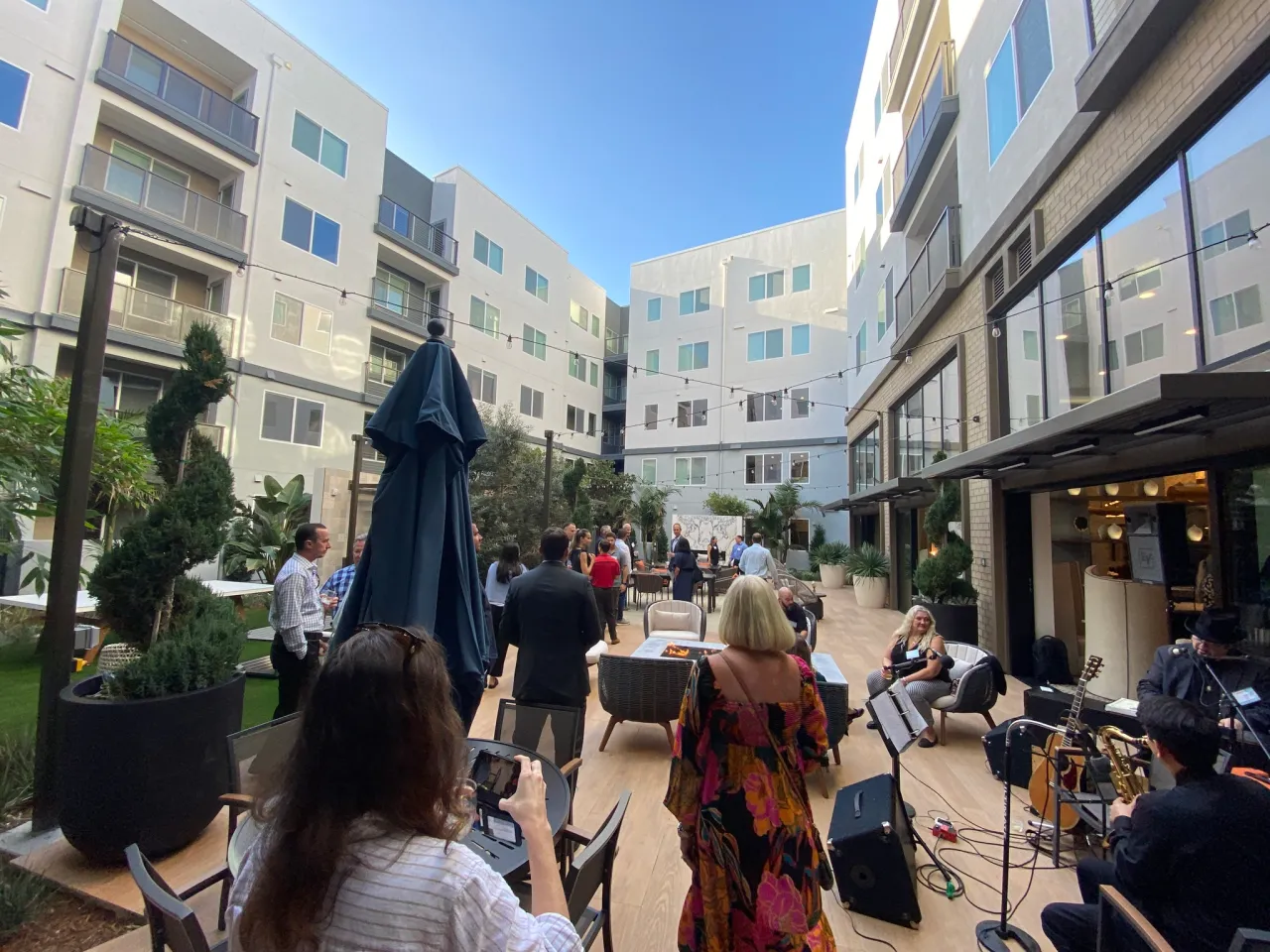
The crucial factors behind a successful mall redevelopment therefore appear to be a supportive community and motivated investors. The structural challenges of reuse/redevelopment can be met by expert design teams, and many municipalities are eager to increase their tax revenues on otherwise nearly dormant properties. To paraphrase the oft-quoted movie Field of Dreams, this isn’t even a case of “if you build it, they will come;” the communities are already there, simply waiting for an excuse to drop by.